
Lesson’s from Anya Hindmarch's Approach to Storytelling
I recently had the opportunity to hear Anya Hindmarch speak at Vervaunt Pulse.
She spoke about the creative discipline required to build a brand that lasts. About the power of storytelling. And about finding ways to bring wit and personality to everyday essentials.
As she talked, it struck me that those same principles aren't confined to the products or the retail experience. They run through the brand's email marketing too.
As a CRM consultant, I spend a lot of time analysing campaigns from fashion brands. Many have beautiful photography. Many have excellent products.
Very few create emails that feel like an extension of the brand itself.
Anya Hindmarch is one of them.
Here are four lessons every e-commerce brand can learn.
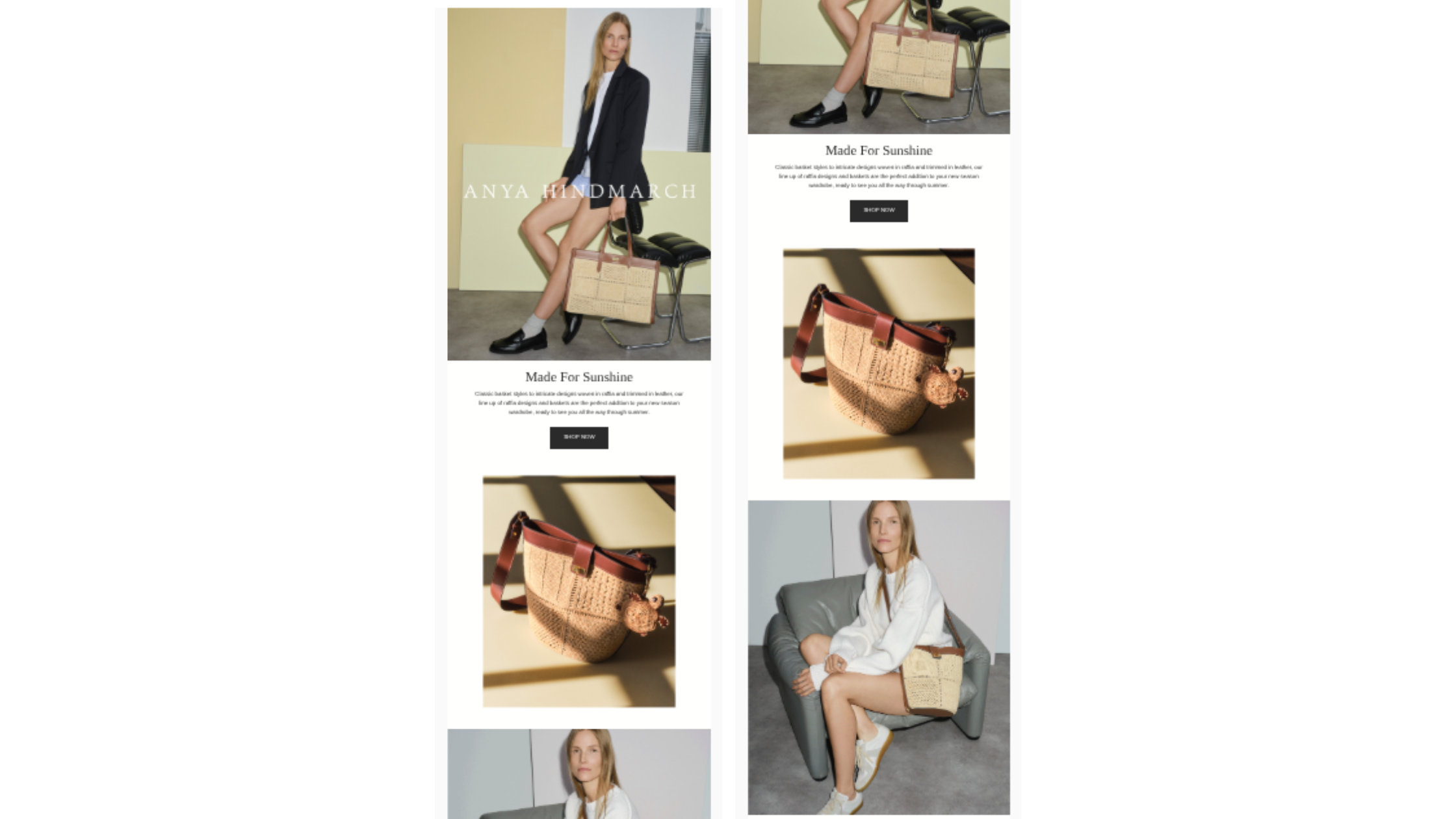
1. Every email starts with a story, not a product
One thing immediately stands out when you browse Anya Hindmarch's campaigns.
They're never simply announcing products.
Instead, every email begins with a central idea.
The Made For Sunshine campaign isn't really about raffia bags.
It's about the feeling of summer.
Warm light.
Natural textures.
Holiday dressing.
The products become part of that story rather than the entire message.
The same approach appears throughout the brand's emails.
Instead of asking:
"What products should we feature today?"
They seem to ask:
"What story are we inviting customers into?"
It's a subtle shift, but it completely changes how the campaign feels.
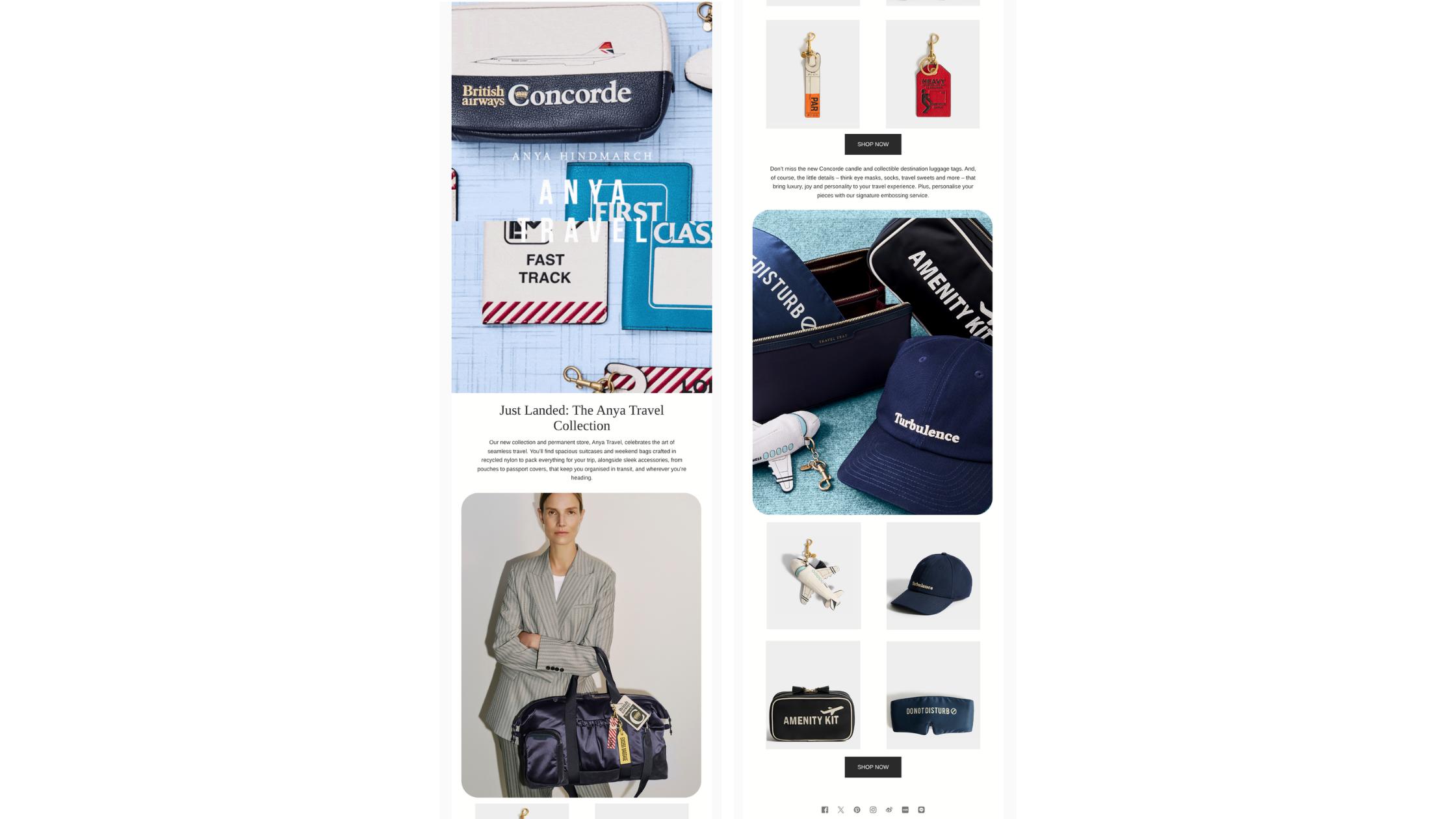
2. The strongest campaigns create a world around the product
My favourite example has to be the launch of the new travel collection.
Rather than introducing passport covers, luggage tags and travel bags individually, the campaign builds an entire world inspired by flying.
Fast Track.
First Class.
Concorde.
Even the product names and supporting imagery reinforce the same narrative.
You're no longer browsing accessories.
You're imagining your next journey.
This is such a valuable lesson for ecommerce brands.
Collections become far more memorable when they're built around one clear creative concept instead of a list of new arrivals.
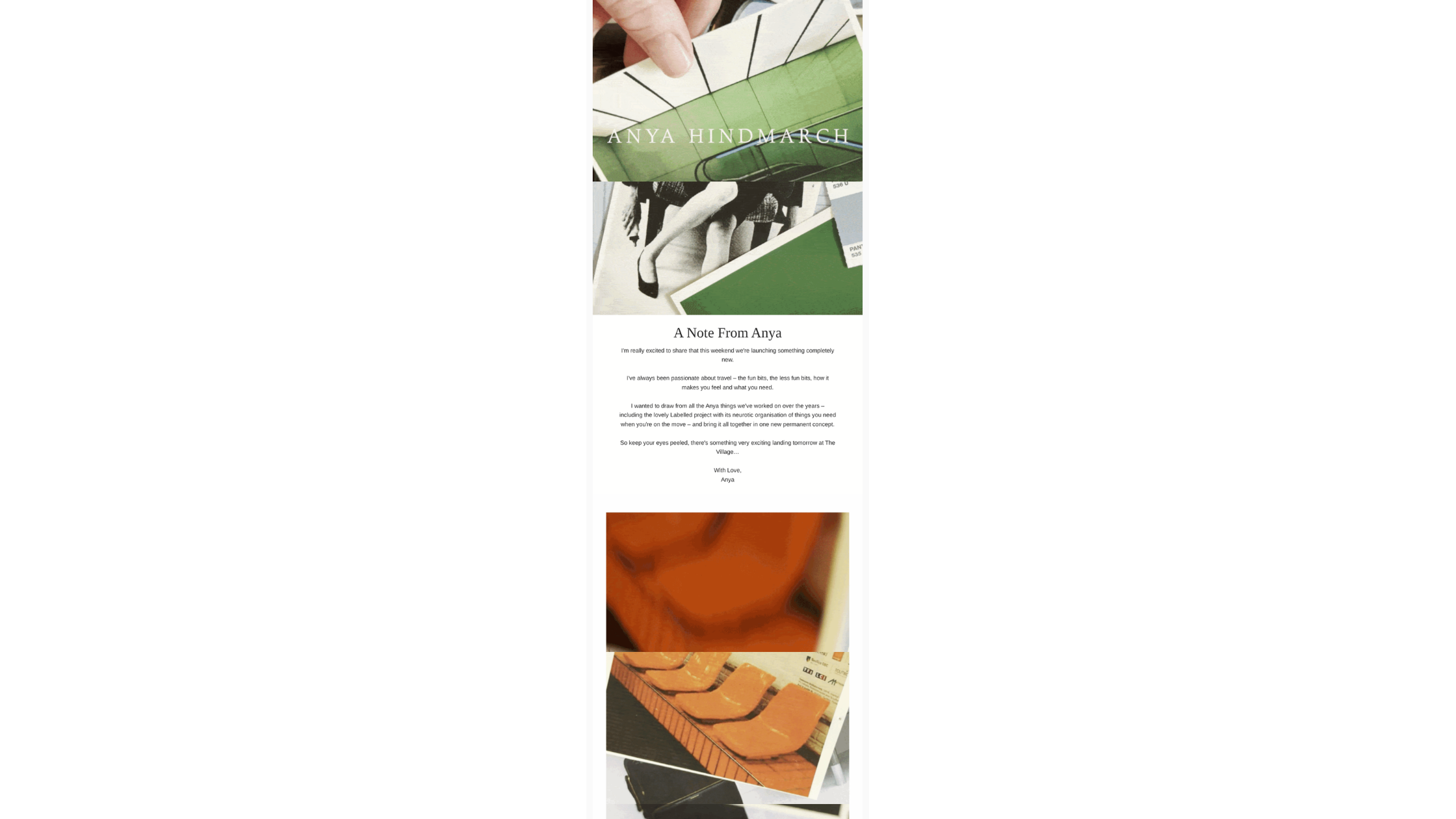
3. Founder stories create emotional connection
One campaign stood out for a completely different reason.
Before launching the new travel concept, subscribers received A Note From Anya.
Instead of teasing a launch with vague marketing copy, Anya explains where the idea came from.
She talks about her lifelong fascination with travel. She references the success of the Labelled collection. She shares why she wanted to bring those ideas together into something permanent.
Only then does she ask readers to look out for what's coming next.
It's simple, personal and authentic.
And it creates genuine anticipation.
Founder-led emails are often underused, particularly by growing brands.
Customers don't just buy products. They buy into people, ideas and purpose.
Sometimes the most powerful email isn't selling anything at all.
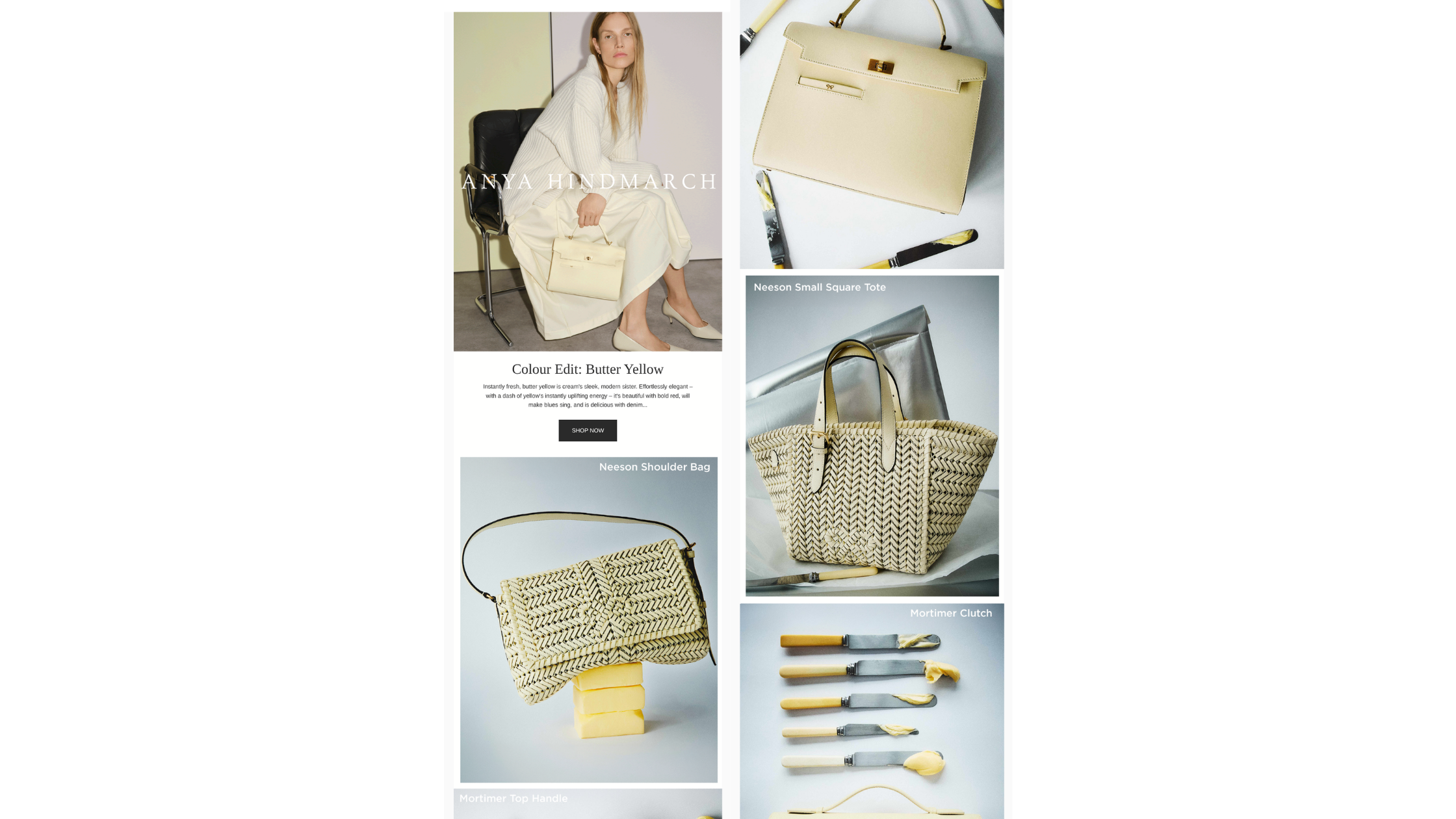
4. Every email feels unmistakably Anya Hindmarch
Perhaps the biggest compliment I can give these campaigns is this:
If you removed the logo, I think I'd still know who they came from.
That's surprisingly rare.
The typography. The photography. The playful use of animation. The witty copy. The careful pacing. Even the way products are grouped together.
It all feels incredibly intentional.
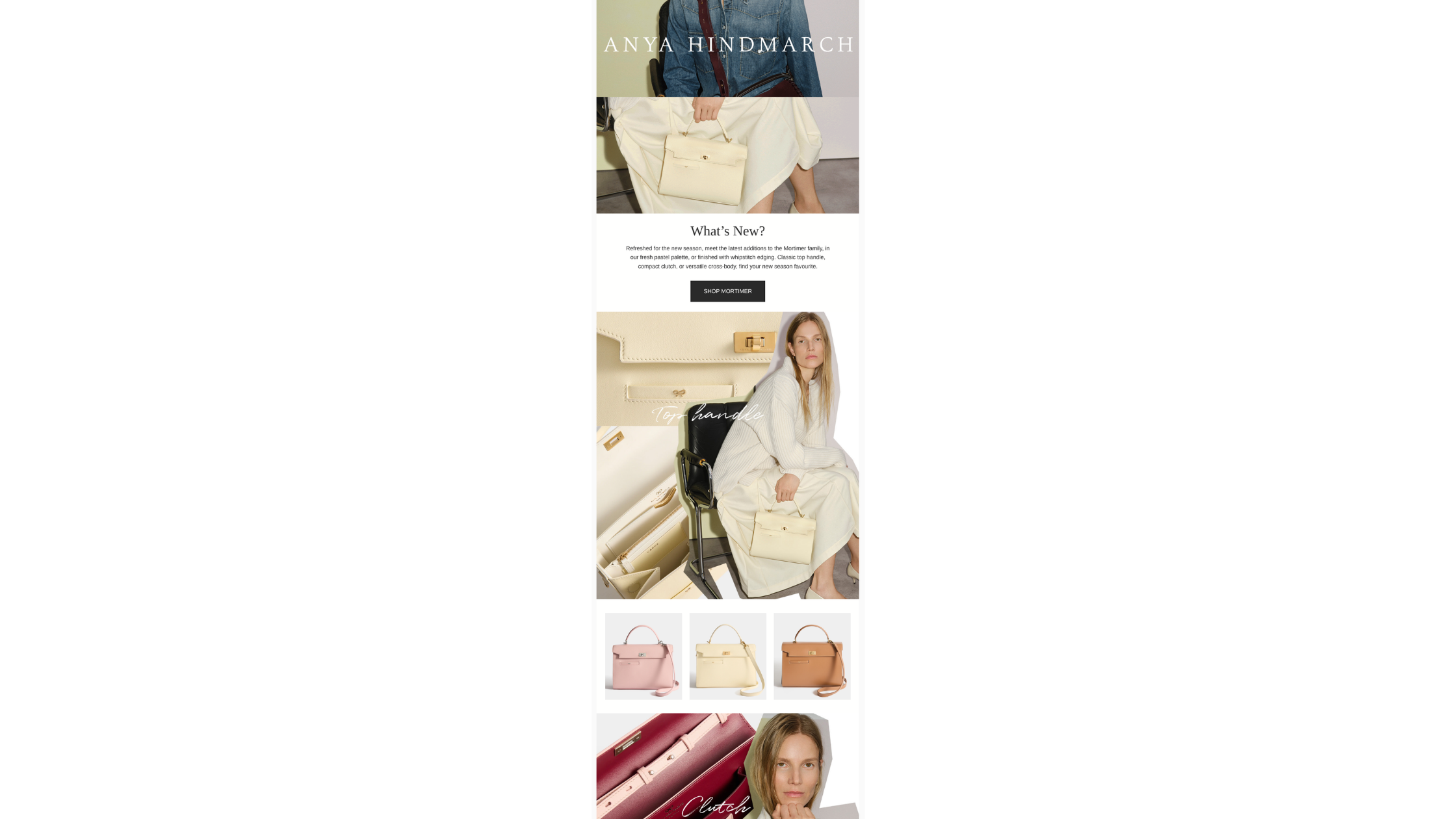
The Mortimer collection is a great example.
Rather than presenting a product grid, the email moves through different chapters (Top Handle, Clutch, Crossbody) almost like pages in a magazine editorial.
The GIFs add another layer.
They're not distracting or gimmicky.
They create movement and atmosphere, making the experience feel more immersive while keeping the focus on the craftsmanship of the collection.
Every decision reinforces the same brand identity.
That's consistency at its best.
Great email marketing builds brands, not just revenue
One of the themes Anya spoke about at Pulse was the discipline required to build a brand that stands the test of time.
Looking through these campaigns afterwards, it struck me that the same discipline exists in their CRM.
They're not trying to squeeze every product into every email.
They're not relying on constant offers.
They're not shouting louder than everyone else.
Instead, every campaign feels considered.
Every email tells a story.
Every interaction strengthens the brand.
That's what the best email marketing does.
It doesn't just generate clicks today.
It gives customers another reason to remember you tomorrow.
